
The Sustainable Beauty of B Corporations
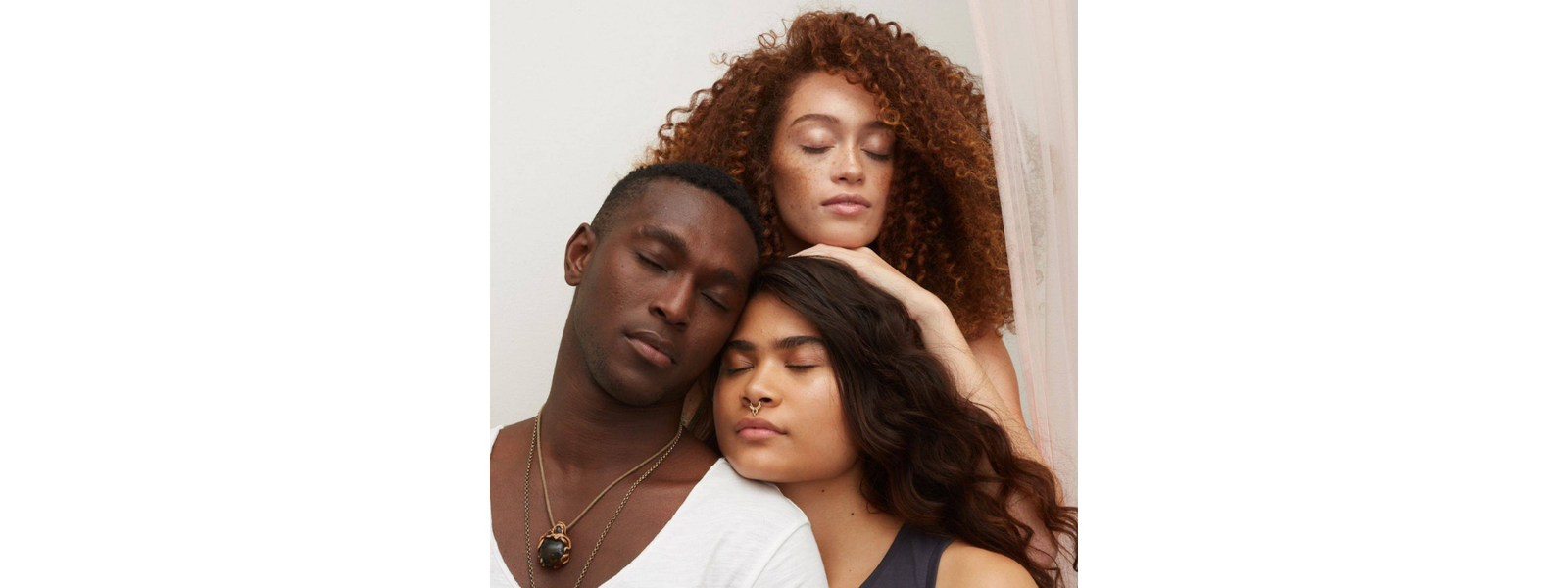
The fashion and beauty industries have long been praised for inspiring creativity, popularizing standards, and pioneering disruption. New styles, new products, and new collections have created culture and exploded economic growth... but there has been a cost for all the innovation. You may be familiar with criticisms of fast fashion’s rise – the insta-fed segment of industry that spun out of control with ‘new-hot-now’ fervor – ill-managed in labor risk, waste generation, and environmental toll. The beauty industry has had its own parallels, with impact not only on worker safety, waste, and the environment but also on consumer safety due to direct application to the skin. Hazardous formulations containing carcinogens, endocrine disruptors, and neurotoxins have been packaged and sold by the ton. Sad to say, corporate leaders have been willing to engage in questionable business practices due to shareholder demands for profit.
Fashion and beauty’s effect on social mental/emotional well-being has perhaps been just as serious a problem, if not more so, than their impact on physical and environmental health. Low self-esteem, obsessive purchasing behavior, and body dysmorphia are but a few of the insidious yet undeniable outcomes of industry marketing and media exposure.
Thankfully, we’re realizing that we must do better and be better if we as humans are going to survive and thrive in the long run. Just as we must aggressively act to advance environmental wellness and sustainability, we must simultaneously act to advance social wellness and sustainability.
Public Benefit Corporations
In the past, for-profit businesses were legally beholden to the bottom line, so it is no wonder that short-term gains were prioritized over long-term impact. Now, we have come together to build a new kind of business that rewards public benevolence alongside financial success.
A public benefit corporation is best described as a hybrid between for-profit and non-profit business. It is a for-profit company that exists to make a positive impact on society, workers, the community, and/or the environment in addition to making a profit as its legally defined goals. Thus, a public benefit company answers to all its stakeholders, not just its shareholders, so it cannot be sued for making decisions that may limit short-term profit in pursuit of its defined greater good. Maryland became the first state to pass benefit corporation legislation in 2010. Today, 35 states and the District of Columbia have authorized the establishment of public benefit corporations.
.png)
B Corporations
Even before public benefit corporations became authorized by states, three friends came together to found a non-profit organization called B Lab in 2006. They recognized that the purely capitalistic economic model caused many businesses to act in their own best interests, valuing short-term gains over long-term solutions. Yet society’s most challenging problems cannot be solved by government and nonprofits alone. B Lab was established to qualify and champion businesses that are committed to acting as forces for good. As a collective, the B Corp community works to reduce inequality and poverty, build a healthier environment, strengthen communities, and create more high-quality jobs. Today, there are over 3500 Certified B Corporations in over 70 countries. Well-known companies such as Patagonia, Ben & Jerry’s, Bronner’s, and Allbirds are among those in the B Corp family.
The B Corporation Certification Process
Becoming a B Corporation goes way beyond product or service level certification. B Corp Certification is the only certification in the world that measures a company’s entire social and environmental performance. To become a Certified B Corporation, a company must prove that it meets the highest standards of verified social and environmental performance, public transparency, and legal accountability to balance profit and purpose.
First, a company must take the B Impact Assessment. The B Impact Assessment evaluates how a company’s operations and business model impact its stakeholders: its workers, community, investors, suppliers, environment, and customers. From its supply chain to its charitable giving and employee benefits, B Corp Certification proves a business is meeting the highest standards of verified performance. There are around 200 questions total in the assessment. More than 50,000 companies have taken the B Corporation assessment for an indication of where they stand vs other companies. The average score of all companies taking the assessment is 50. A company must score an 80 or above to qualify for B Corp Certification.
Second, a company must also amend its legal governing documents to require its board of directors to balance profit and purpose. It may also be required to be set up as a public benefit corporation, though the requirement differs by state and region.
Third, a company must undergo a thorough audit whereby it provides hard and fast evidence of its standards, practices, and history as claimed in its B Impact Assessment.
This includes but is not limited to employee handbooks, codes of ethics, vendor vetting, local sourcing, diversity of leadership and employees, maternity and paternity leave, compensation of leadership vs. lowest-paid employee, charitable contribution (must be 2% of gross revenues to qualify), renewable energy use, carbon footprint calculation, disclosure of product recalls, toxin reduction, and so much more.
Finally, there is a licensing fee that must be paid to be part of the Certified B Corporation program, and recertification must take place every three years to maintain a certified status.
.png)
The B Corp Commitment is Real
Becoming a B Corporation is a real commitment.
It can take months, sometimes even years, for a company to obtain all the necessary documentation and make adjustments to its current mode of operations to even score high enough to qualify. Many companies feel that the effort is too great or changes too dramatic to pursue certification. Others are adverse to the level of transparency and accountability required. This is what makes B Corp Certification so meaningful. Not only does a company commit to doing the work, but it also commits to accountability, transparency, and the unrelenting desire to operate as a force for good.
Why The Human Beauty Movement is Certified
I’m proud to have recently completed the B Corp Certification process, and now my company. The Human Beauty Movement is a Certified B Corp as well as a public benefit company (PBC). It’s not enough to just talk the talk, it’s important to walk the walk and hold oneself accountable to the highest standards of ethical business operations. As such, I’ve come to appreciate the near and long-term impact of my decisions. People, planet, and purpose will always take priority over profits. As a business leader, I’m committed to creating a better kind of beauty, one that is truly healthy and creates wellness for all humans and their habitats. As an individual, I believe change starts inside each and every one of us. We have the power to make better choices and vote with our dollars for good businesses and brands to succeed. When they do, the whole world wins, and that is what promoting sustainability is all about.
.png)
Jennifer Norman is the Founder and Chief Human Officer of The Human Beauty Movement, PBC, and Humanist Beauty. The HBM is a Certified B Corp and public benefit company that commits to using the power of business to support diversity appreciation, inclusion and self-esteem and using the power of business to support wellness of mind, body, and spirit. Humanist Beauty is award-winning, inclusive skincare that is 100% vegan, Leaping-Bunny certified cruelty-free, EWG Verified™, and carbon-neutral.
Follow Jennifer’s work on Instagram at @iamjennnorman, @thehumanbeautymovement, and @humanistbeauty.